SShortSingh.
Back to feed

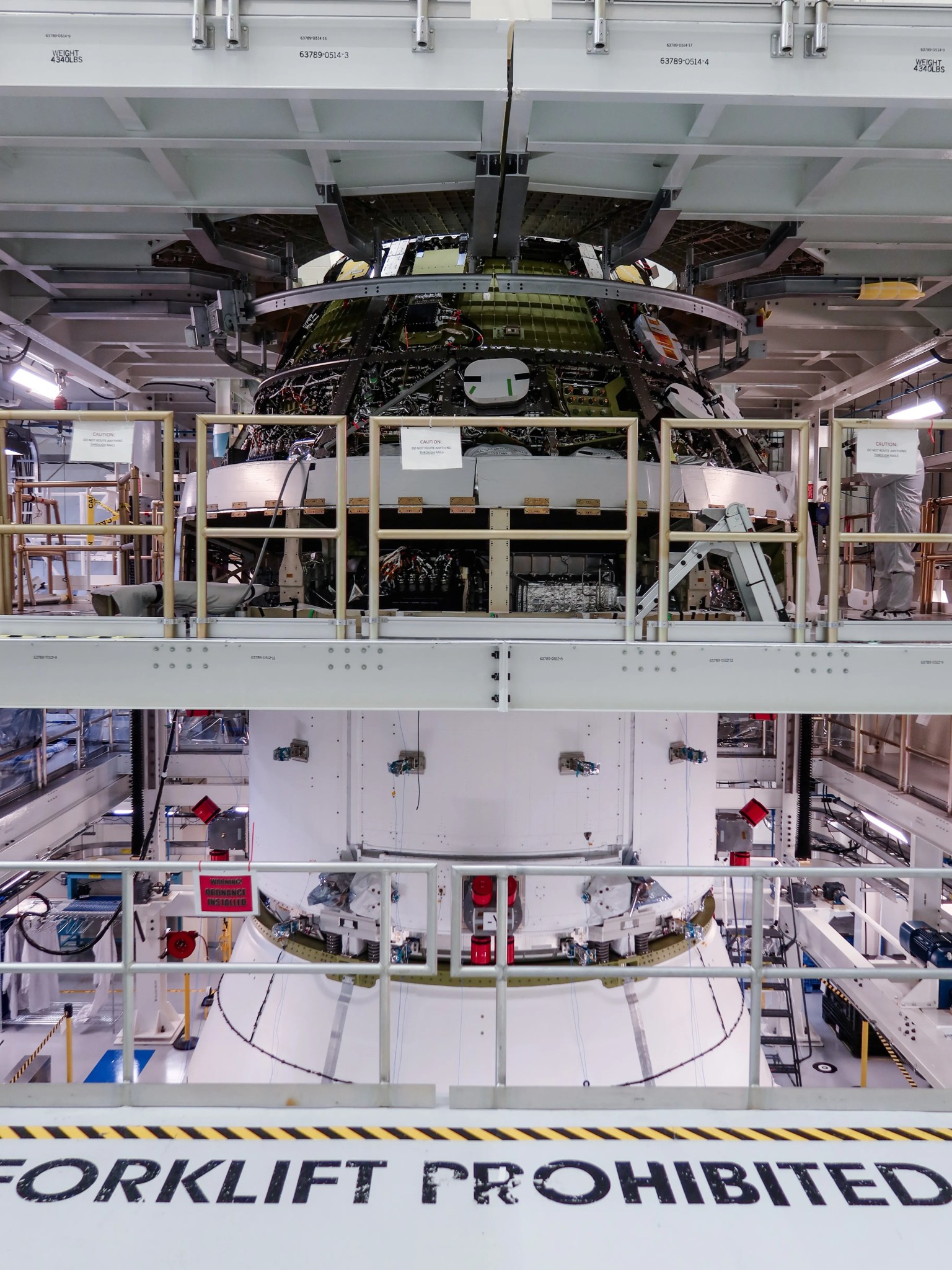
Artemis III Orion Crew and Service Modules Mated at Kennedy Space Center

0
·1 views

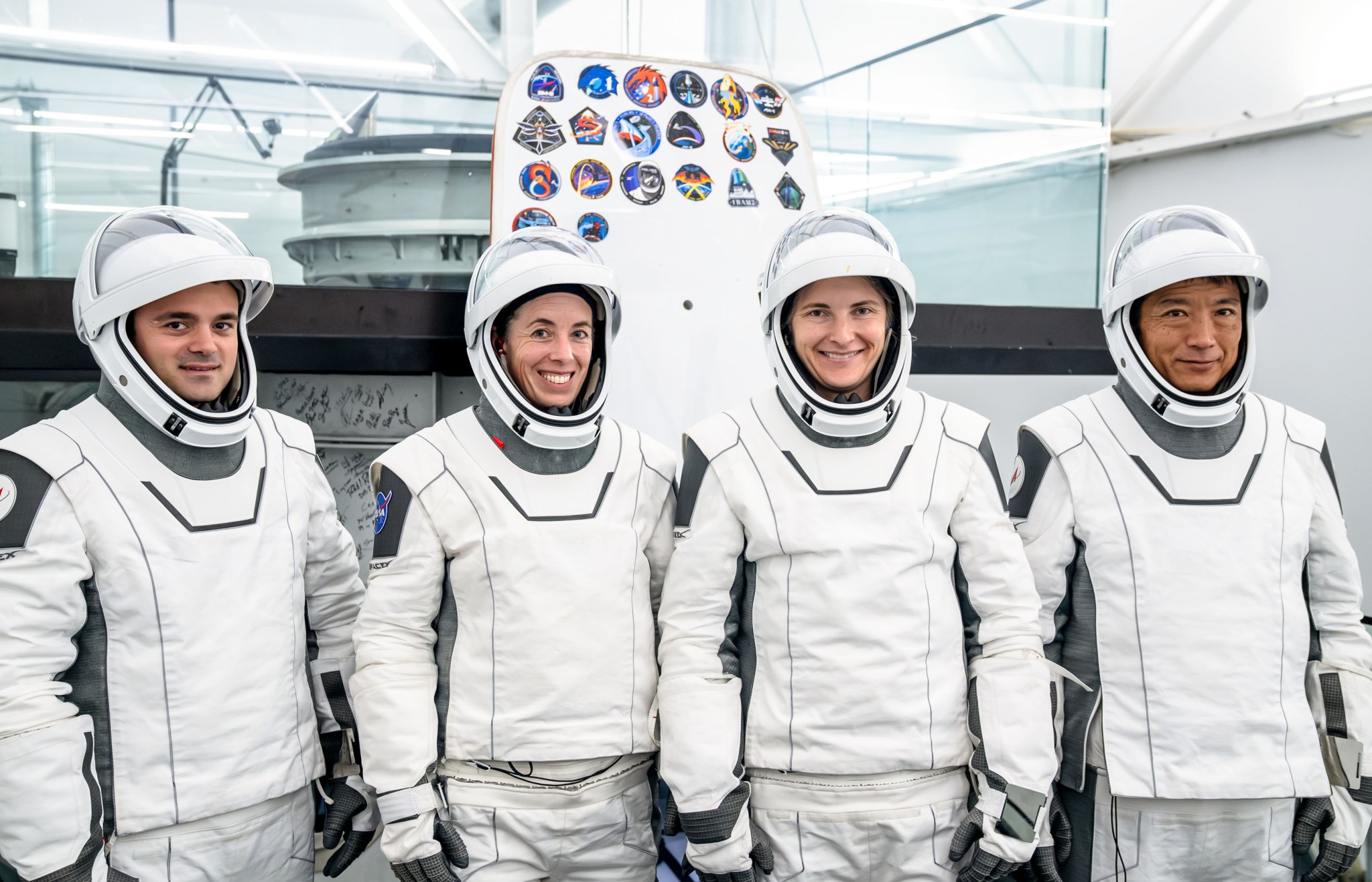
Technicians at NASA's Kennedy Space Center in Florida joined the Orion crew and service modules for the Artemis III mission on July 30, 2026. The work took place inside the Neil Armstrong Operations and Checkout Building. The crew module is designed to carry and sustain four astronauts during the mission. The crew includes NASA astronauts Randy Bresnik, Andre Douglas, and Frank Rubio, along with ESA astronaut Luca Parmitano. This milestone marks a key step in preparing the Orion spacecraft for the Artemis III lunar mission.

Read the full story at NASA

This is an AI-generated summary. ShortSingh links to the original source for the complete article.

Discussion (0)

Log in to join the discussion and vote.

Log in

Related stories

0
SpaceNASA ·

Perseverance Rover Films Earth Passing Behind Mars Moon Phobos

NASA's Perseverance Mars rover captured a rare celestial event on July 2, 2026, during the mission's 1,907th Martian day. Using its Mastcam-Z instrument, the rover recorded a composite of seven images showing Earth appearing as a small bright dot in the Martian sky. The footage shows Earth moving from the upper left to the lower right as it passed behind the Martian moon Phobos. The black background in the composite image is a result of the imaging conditions during the observation.

0
SpaceNASA ·

Perseverance Rover Captures Earth Disappearing Behind Mars Moon Phobos

NASA's Perseverance Mars rover has photographed Earth vanishing behind Phobos, the larger of Mars' two moons. In the images, Earth appears as a small point of light in the Martian sky before being eclipsed by the crescent-shaped moon. This marks the first time such an event has been recorded from the surface of another planet. The milestone adds to Perseverance's growing catalog of unique astronomical observations made from Mars.

0
SpaceNASA ·

NASA Deploys Automated Mini-Labs on ISS to Boost Research Efficiency

The International Space Station simultaneously hosts hundreds of scientific experiments, many of which can take hours to complete. Because astronaut time is limited and valuable, researchers have sought ways to reduce crew involvement in routine lab work. Fully automated devices known as ADvanced Space Experiment Processors, or ADSEPs, have been developed by Redwire to address this challenge. These compact facilities are designed to conduct space science experiments independently, minimizing the need for direct astronaut intervention. The technology aims to increase the volume and efficiency of research carried out aboard the station.

0
SpaceNASA ·

NASA APOD Highlights Mysterious Spokes Observed on Saturn's B Ring

NASA's Astronomy Picture of the Day (APOD) for August 5, 2026 features an image highlighting the enigmatic spoke formations on Saturn's B Ring. The spokes are transient, radially aligned features that appear and disappear across the ring's surface, puzzling astronomers since their discovery by Voyager spacecraft. The featured image and accompanying explanation were prepared by a professional astronomer as part of APOD's daily mission to showcase compelling cosmic phenomena. APOD, a long-running NASA education initiative, publishes a new space image each day along with a scientific explanation for the public. The spoke phenomenon on Saturn continues to be a subject of active research, with scientists studying their formation and behavior.

Artemis III Orion Crew and Service Modules Mated at Kennedy Space Center · ShortSingh