0
TechnologyArs Technica ·
We've flown a radiation-blocking vest to the Moon and back, and it worked
Let's shield the astronauts instead of the spacecraft.
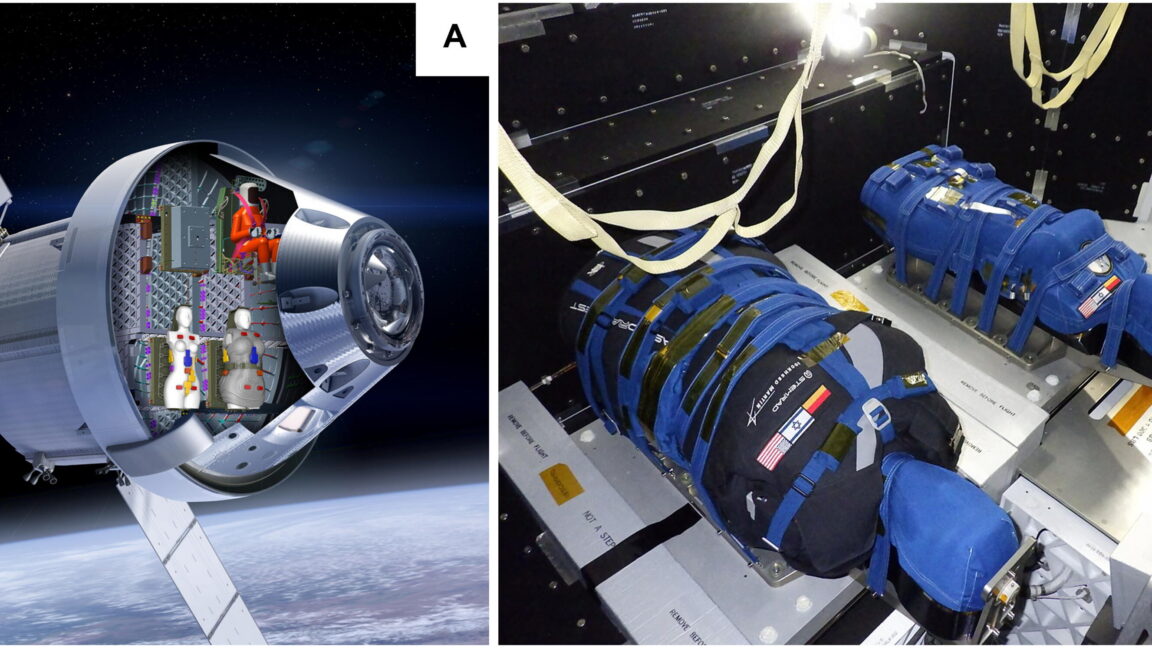
Let's shield the astronauts instead of the spacecraft.
Article URL: https://alignment.anthropic.com/2026/conceptual-reasoning-index/ Comments URL: https://news.ycombinator.com/item?id=49285909 Points: 6 # Comments: 3
A developer created Aura Router after struggling to maintain both React and Web Components in the same project when client-side navigation was needed. The router is designed to add single-page application navigation to existing HTML and Web Components projects without introducing a second component model. It requires every public URL to return complete, indexable HTML, allows routes to be declared as Custom Elements, and ensures ordinary links still function without JavaScript. A live demo illustrates that Aura updates page content without triggering a full browser reload, while also working correctly with JavaScript disabled. The initial release, version 0.1.0, is available via npm under the package name @auraui/router.

Former Trinamool Congress MLA Nirmal Ghosh was arrested by West Bengal Police from a hotel in Balasore district, Odisha, on Thursday. His whereabouts were traced through his mobile phone trail. Ghosh is a suspect in a new case connected to the August 2024 rape and murder at RG Kar Medical College. The case stems from a complaint by the victim's father alleging that evidence was deliberately destroyed. Ghosh, along with two others, is accused of pressuring the family to conduct the cremation hastily.
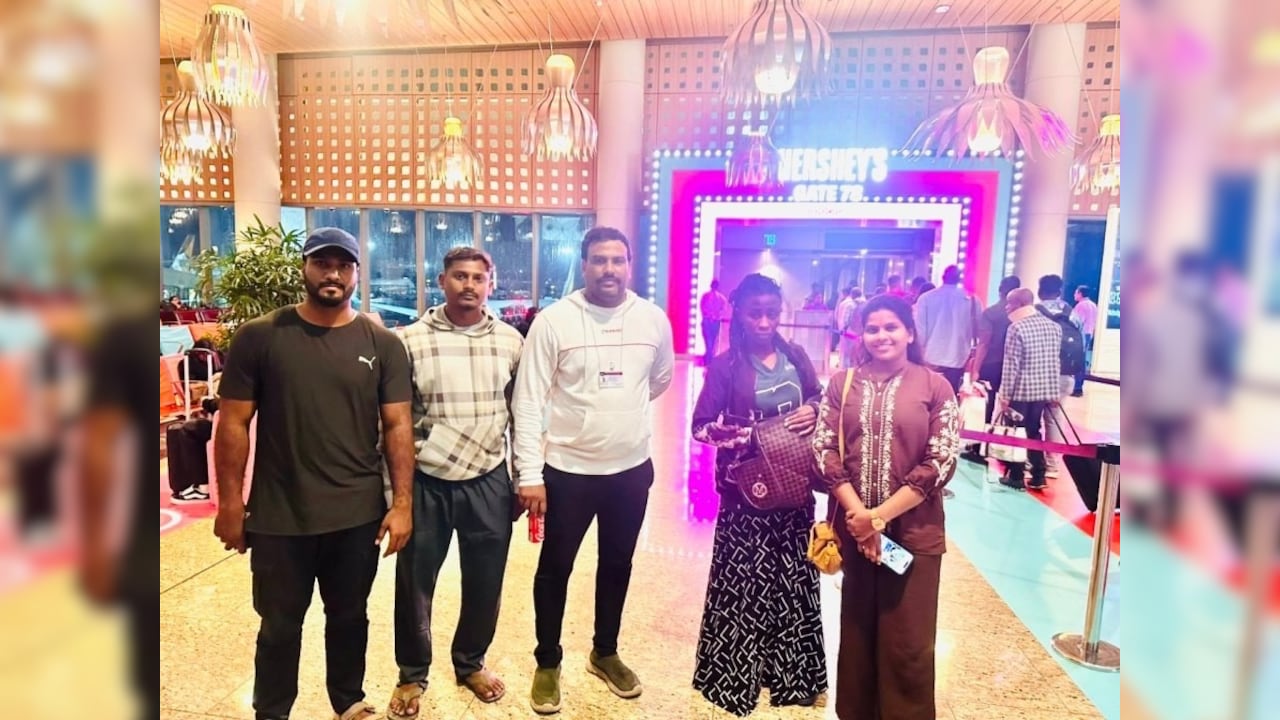
A Ugandan national has been deported from Hyderabad following an investigation by local authorities. Verification confirmed that the woman had overstayed her visa, which served as the primary grounds for her deportation. Police also flagged her alleged connections to drug networks as an additional factor in the decision. The deportation was carried out after authorities completed the necessary checks and procedures.
At least eight children have died and hundreds of others have fallen ill across villages in Madhya Pradesh, India. Health authorities are currently investigating the outbreak but have yet to identify a definitive cause. Officials noted that the affected children displayed symptoms consistent with multiple infections rather than a single disease. The situation has raised serious public health concerns in the region as investigations continue.

Swiss online bank Swissquote has revised its full-year revenue and profit guidance downward following a sharp decline in cryptocurrency trading income during the first half of the year. The drop in crypto activity weighed heavily on the bank's overall financial performance. As a result of the reduced outlook, the company's shares fell. The announcement highlights how sensitive fintech-oriented banks remain to fluctuations in digital asset trading volumes.

President Trump has issued a formal directive allowing US federal agencies to collaborate with vetted private technology companies on offensive cyber operations. The initiative targets foreign criminal networks, aiming to disrupt and dismantle global cybercrime organizations. Private firms operating under government supervision will contribute specialized resources and innovation to these focused cyber efforts. The partnership is designed to strengthen the government's overall capacity to combat cybercrime by leveraging private sector expertise.
The sliding window is a programming technique that uses two pointers, left and right, to maintain a moving subarray or substring without rescanning elements from scratch. As the right pointer expands the window, a state such as a frequency map or running sum is updated incrementally; when a constraint is violated, the left pointer advances to shrink the window. Each element enters and exits the window at most once, keeping total operations proportional to n and achieving O(n) time complexity. Classic problems like finding the longest substring with at most K distinct characters or the minimum subarray with a given sum drop from O(n²) brute-force solutions to linear time using this approach. A common pitfall is failing to update the tracked state when the left pointer moves, which causes the window's data to become stale and produce incorrect results.
Article URL: https://ordinaryabundance.com/ Comments URL: https://news.ycombinator.com/item?id=49285770 Points: 12 # Comments: 0
A developer on DEV Community built a fully CSS-based visual recreation of South Indian Filter Kaapi, inspired by their love for the traditional beverage. The project uses multi-layered gradients to simulate coffee froth and a metallic brass finish on the traditional dabara set. GPU-accelerated CSS keyframe animations were employed to render continuous steam effects without relying on external textures or JavaScript. The work was submitted as part of a CSS challenge, showcasing procedural design techniques using conic and linear gradients. The developer plans to extend the project with dark and light mode toggles to evoke different cafe atmospheres.
A developer received a request from a physical grocery store owner who asked for a website, assuming it would be an e-commerce platform. After asking how the business actually operated, the developer discovered the store had no online orders, delivery, or customer accounts, making a traditional website unnecessary. The real problem was that sales and inventory were tracked manually, making it hard to monitor stock levels, daily revenue, and profit accurately. The developer instead built a backend-driven retail sales and inventory management system tailored to the store's in-person workflow. Key design decisions included keeping all business calculations server-side and storing price snapshots per transaction to ensure historical financial records remained accurate.
A South Korean court has handed a 15-year prison sentence to the head of Delio, a centralized finance cryptocurrency lending platform. The executive was convicted of embezzling digital assets belonging to over 1,100 customers. The fraud amounted to approximately $50 million in stolen crypto funds. The case highlights growing legal scrutiny of centralized crypto lending platforms in South Korea.

A developer named Alex Morley-Finch built a search engine indexing 500,000 domains targeted at makers and builders. The project was completed over a single weekend at a total cost of just $10. Finch documented the process in a blog post detailing the birth of the project, called Marlin. The low-cost, rapid build highlights how accessible modern web infrastructure has become for independent developers.
A developer woke up to a $2,800 charge after their AI agent made 21 API calls to a premium LLM endpoint in just 60 seconds at 3 AM, with a budget alert email arriving only after the money was already spent. Standard defenses like rate limits and manual monitoring failed to prevent the incident, prompting the developer to build AgentShield, an open-source pre-execution spend firewall that evaluates every transaction against configurable rules before any API call is made. The tool supports seven composable rules including transaction limits, velocity checks, and category blocks, and can return an APPROVED, BLOCKED, or FLAGGED decision in under one millisecond. Recognizing that blocking runaway agents still leaves the root cause unknown, the developer collaborated with Jacopo, creator of Agent-Devtools, a local-first causal debugger that provides visual replay and full execution timelines to explain why an agent misbehaved. The two tools were integrated via a shared event schema, allowing spend decisions to appear directly within Agent-Devtools' execution timeline for a combined prevention-and-diagnosis workflow.
Celestina Amadi, who leads Cloud Engineering at Moniepoint, oversaw a proactive migration of the company's Kafka infrastructure from VM-based deployments to Strimzi on Kubernetes. The existing setup used Docker Compose on individual VMs, requiring manual SSH access and port-forwarding for every configuration change across multiple CDC pipelines. Operational inconsistencies grew over time, with some instances running ZooKeeper and others using Raft, no standardized provisioning process, and stale versions across the fleet. Monitoring relied on JMX Exporter and Loki but still demanded hands-on SSH access for diagnosis, with no unified view of the entire cluster fleet. The decision to rebuild was made not in response to a crisis but because the team recognized the setup would not scale reliably as Moniepoint's payment and savings infrastructure continued to grow.