SShortSingh.
0
ProgrammingHacker News ·

Google DeepMind unveils AlphaProof Code, a new AI tool focused on code

Google DeepMind has announced AlphaProof Code, according to a post on its official blog. The source material is limited to the announcement link and a Hacker News discussion that drew 75 points and 26 comments. The post's details about the system's capabilities could not be confirmed from the available text. Readers seeking specifics should consult DeepMind's blog directly.
0
BusinessEconomic Times ·

Sonia Gandhi Recounts Her Experience Battling Cancer Twice

Congress leader Sonia Gandhi has spoken publicly about her experience of fighting cancer on two separate occasions. Her remarks shed light on the personal challenges she faced during both bouts of the illness. The disclosure brings renewed attention to her health journey as she reflects on the ordeal. No further details from the original article text were provided in the source material.

0
TechnologyArs Technica ·

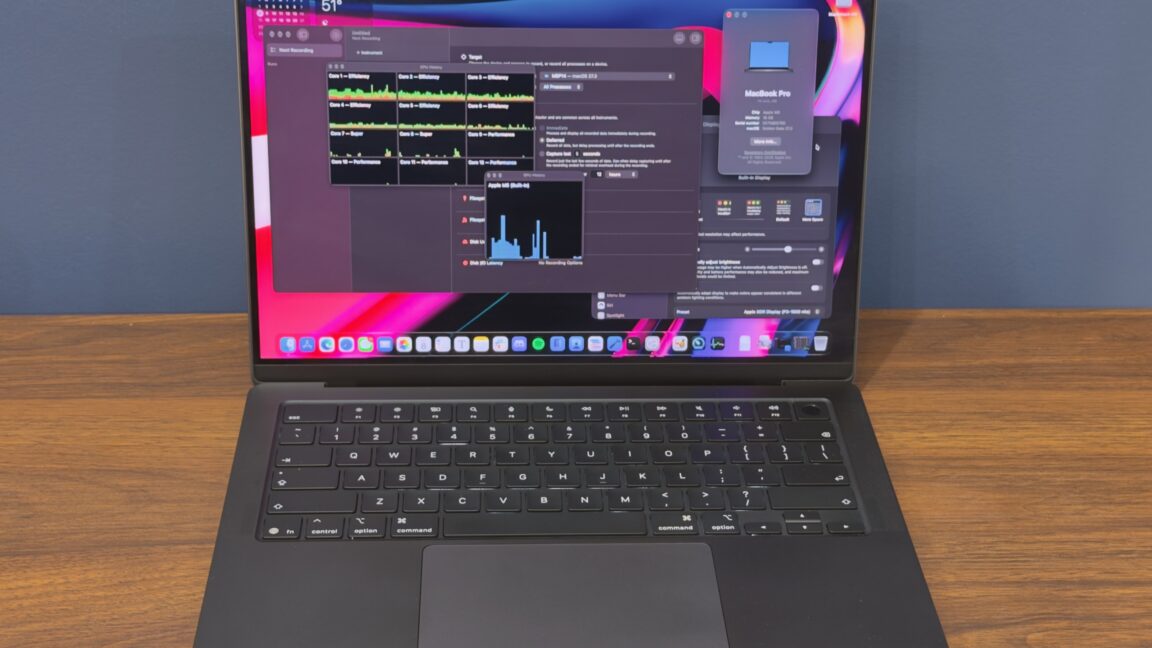
Review: Apple's M6 MacBook Pro Is Solid but Lacks Major New Features

Ars Technica has reviewed Apple's M6 MacBook Pro and found it to be a good laptop overall. The review notes that, as usual, the base MacBook Pro falls behind Apple's higher-end flagship models in the areas that matter most. The reviewer's central criticism is that the machine omits the more exciting features people were hoping for. The source text provided is brief, so specific details such as pricing, exact specifications, and release date are not included in this summary.

0
ProgrammingDEV Community ·

Setting Up a Lightweight K3s Kubernetes Environment with kubectl on WSL2 and Windows 11

This tutorial walks readers through building a compact Kubernetes environment using K3s on an Ubuntu virtual machine hosted on Google Cloud. It assumes Ubuntu is already set up on a Google Cloud VM and on WSL2 under Windows 11, with the two machines connected over a network. The guide covers checking the OS version and available memory, confirming kubectl is absent, and installing K3s with a script that adds the VM's external IP to the TLS certificate. After installation, kubectl is automatically placed on the system, which the author verifies with a follow-up check.

0
ProgrammingDEV Community ·

Tokyo solo developer Kenji Sakuramoto builds over ten apps from personal needs

Kenji Sakuramoto runs kensaurus LLC, a studio founded in June 2025 in Shibuya, Tokyo, and maintains more than ten code repositories on his own. He says most of his apps began with problems in his own life, including lets-talk for practising difficult conversations, help her take photo for remote photo direction, and glot.it for learning Thai. Other projects include yen-yen, a shared household money book without bank links, and The Wanting Mind, a free book on why people want things. To keep AI agents consistent across his repositories, he wrote reusable playbooks and uses a separate read-only reviewer to decide whether a task is truly finished. He notes that the post was drafted with an AI assistant and fact-checked before publication.

0
IndiaTimes of India ·

Matthew Stafford buys Hidden Hills mansion for $28.2 million, a local record

NFL quarterback Matthew Stafford and his wife Kelly purchased a newly built mansion in Hidden Hills for $28.2 million. The price sets a new record for the area, surpassing the previous high of $26 million. The couple already owned neighboring properties, giving them a strong presence in the community. After selling three nearby homes, they have recovered most of their investment.

0
ScienceWIRED ·

Grindr to Launch Exclusive Premium Tier Edge with Limited Membership

The gay hookup app Grindr is rolling out a new premium tier called Edge this month. According to the report, Grindr will cap membership numbers in order to preserve exclusivity. The move positions the higher-priced tier as a restricted offering for a select group of users. The source article, published by WIRED, frames the change as creating a gated community for the app's most affluent users. Further details on pricing and features were not provided in the source text.

0
IndiaNDTV ·

Fog Triggers Two Pileups on Bulgarian Motorway, 12 Killed

Dense fog caused two separate pileups on the motorway connecting Bulgaria's capital, Sofia, with the Black Sea port of Burgas. The crashes resulted in the deaths of 12 people. Authorities closed the road in both directions following the accidents. The source article does not provide further details on the exact timing or the number of vehicles involved.

0
ProgrammingHacker News ·

Open-source 15 MB self-hosted media server offers Netflix- and Spotify-style streaming

A developer has shared a self-hosted project called HolyArrs on Hacker News, positioning it as a lightweight alternative to commercial streaming services. The tool is described as roughly 15 MB in size and is designed to run on a user's own media server. It aims to provide video and music playback experiences comparable to Netflix and Spotify. The post, which was shared as a Show HN submission, gathered 9 points and 2 comments at the time of reporting. The source material available does not include further technical details about features or supported platforms.

0
ProgrammingDEV Community ·

Capgo, Expo EAS and Codemagic lead 2026 options for solo mobile app deployment

A roundup of 2026 mobile deployment platforms for solo developers ranks tools on building iOS and Android apps, submitting them to app stores, and pushing live updates. The article, written by Capgo's founder, names Capgo as the top all-in-one choice for Capacitor and Ionic apps, starting at $14 a month, and notes it needs no Mac for iOS builds. Other options covered include Expo EAS for React Native, Codemagic's free macOS minutes, Capawesome Cloud, Bitrise, and GitHub Actions. Several services are being retired, including Ionic Appflow for new apps and App Center/CodePush, which shut down in March 2025. The author states that prices were checked on each vendor's pricing page in November 2026.

0
ProgrammingDEV Community ·

Keeva Uses Client-Side Encryption and Walrus Memory to Persist a Credential Vault

A developer has written up Keeva, a credential vault built for the Total Recall hackathon, which stores passwords, API keys, and private notes. The design encrypts records in the browser so that storage only ever receives ciphertext, with decryption possible only after explicit user authorization. Keeva divides responsibilities among a Sui wallet for authorization, Walrus Memory for persistent encrypted storage, and Tatum for blockchain reads and transaction checks. Encryption relies on AES-256-GCM with per-operation random IVs, PBKDF2-SHA256 key derivation, and context binding so that mismatched records fail to decrypt. The article also addresses harder persistence problems, such as password changes, conflicting edits across devices, and unacknowledged storage writes.

0
ProgrammingDEV Community ·

Wrong Instance Family Wastes Cloud Spend Even When Correctly Sized

Right-sizing tools typically focus on whether cloud resources are too big or too small, but a third kind of mismatch, using the wrong instance family for a workload's resource profile, is often overlooked. An instance can show reasonable utilization numbers while its CPU-to-memory ratio is wrong for what the workload actually does. For example, a memory-heavy workload on a compute-optimized instance can waste money on unused compute capacity while delivering weaker memory performance. Catching this requires understanding the application's access patterns rather than relying solely on usage history. The article notes that family selection is the step most commonly skipped by teams that simply apply recommender suggestions.

0
ProgrammingDEV Community ·

Using DevTools Event Listener Breakpoints to Trace Elusive UI Bugs

A developer describes debugging a web app where a menu click caused unexpected modal behavior, with no console errors and handlers scattered across dynamic and third-party code. Regular breakpoints and logging proved ineffective because the relevant event handlers were hard to locate. The author turned to Chrome DevTools' event listener breakpoints, which pause execution whenever a chosen event type's listener is invoked, regardless of where the handler lives. The feature is found in the Sources panel's sidebar, organized by event category with a filter for quick lookup. In one case involving a hover tooltip, setting breakpoints on mouseenter and mouseleave revealed a cleanup timer that was never cleared, explaining the lingering tooltip. The article recommends combining this technique with call stack inspection to understand event propagation.

0
ProgrammingDEV Community ·

Tamper-evident track record uses SHA-256, git and Bitcoin timestamps

A team needed a way to show its forecasts were made before outcomes were known, without requiring readers to take its word for it. Each night, the day's scores are saved to a CSV file before the next market open, and the file's SHA-256 fingerprint is logged with a publication time. The file and ledger are pushed to a public git repository, and the file is also timestamped via OpenTimestamps, which anchors its hash in a Bitcoin transaction independent of GitHub. Any alteration to the file would change its fingerprint, while corrections are added as new entries in a public log rather than edits to existing data. The article notes a practical pitfall, where git line-ending normalisation can alter file bytes, and suggests a .gitattributes rule to prevent this. The approach is presented as an educational, not investment-advice, transparency method.

← NewerPage 198 of 7183Older →