SShortSingh.
0
IndiaNDTV ·

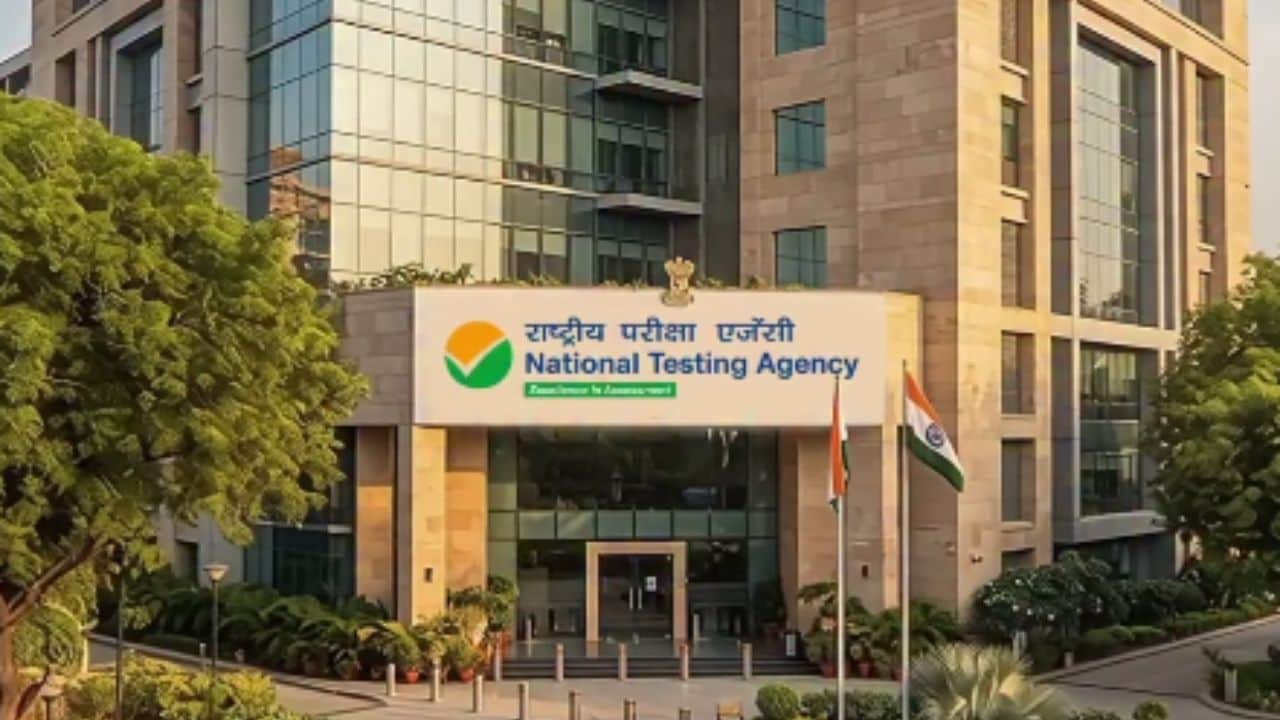
Supreme Court Judges to Visit NTA Office Amid Calls to Restructure Exam Body

The Supreme Court is hearing a petition demanding the replacement or restructuring of the National Testing Agency (NTA), which oversees major national examinations including NEET. The court has decided that judges will personally visit the NTA's office as part of the proceedings. The move signals the court's serious concern over systemic issues within the examination body. The bench indicated that superficial measures would not be sufficient to address the alleged irregularities plaguing the agency.

0
IndiaNDTV ·

Saudi Arabia Faces Renewed Security Threat as Yemen Conflict Unravels Gains

Saudi Arabia launched a military intervention in Yemen in 2015, aiming to counter Houthi forces and secure its southern border. After years of significant military and financial expenditure, Riyadh had made some progress toward stabilizing the region. However, those hard-won gains are now rapidly deteriorating as the situation in Yemen worsens once again. The renewed instability poses a direct security challenge to Saudi Arabia, threatening its border regions and broader strategic interests.

0
ProgrammingDEV Community ·

Developer builds accountless AI agent storage service paid via x402 crypto protocol

A developer created a file and JSON storage service for AI agents that requires no account, API key, or credit card, instead charging $0.01 in USDC per call using the x402 payment protocol. Agents pay autonomously by signing an EIP-3009 transfer, with a Coinbase facilitator handling verification, settlement, and gas fees. Building the service surfaced several technical issues, including a flaky public testnet facilitator causing intermittent payment failures, a Cloudflare Workers limit on password-hashing iterations that only triggered in production, and a request-body stream being consumed before retry attempts. The developer resolved these through defensive patterns such as treating failed settlements as no-ops, cloning request bodies before first use, and caching only fully initialized objects. Two full end-to-end mainnet test runs across 10 settlements each confirmed that no funds moved on failed transactions, and the service is now publicly accessible on testnet.

0
IndiaNDTV ·

Three Chinese Navy Ships Dock in Bangladesh for 5-Day Goodwill Visit

Three Chinese Navy vessels have arrived in Bangladesh for a five-day goodwill visit, signaling continued military engagement between the two countries. The fleet includes a Type 054A guided-missile frigate named Da Qing, a notably capable warship in China's naval arsenal. The Da Qing previously participated in the bilateral 'Sea Guardian' exercise alongside the Pakistan Navy earlier this year. Such port visits are typically aimed at strengthening diplomatic and defense ties between nations. The visit underscores China's growing naval presence and outreach across the Indo-Pacific region.

0
ProgrammingDEV Community ·

Why Defining Requirements Before Writing Code Saves Costly Rework Later

Software engineer Anton argues that the timing of requirement definition determines how expensive a change becomes later in development. Before a contract or schema is declared, altering a requirement means editing a single document with no downstream impact. Once code, tests, and documentation are generated from that contract, a single-clause change must be coordinated across five or more artefacts simultaneously. An internal audit of one service tree on August 13, 2026, uncovered 44 duplicate implementations of just four database-reading patterns, largely because no shared standard had ever been formally stated. Consolidating those duplicates required 40 separate file-level changes, illustrating how an unstated requirement silently multiplies future maintenance work.

0
ProgrammingDEV Community ·

How One Developer Built a System That Turns Documentation Gaps Into Pull Requests

A developer has built a self-improving documentation system that automatically converts reader feedback and unanswered questions into pull requests for human review. The motivation came from recognising that AI agents, unlike human developers, blindly follow outdated documentation without questioning its accuracy. Industry survey data from Mintlify corroborated the problem, showing most teams take over a week to reflect product changes in their docs. The system works by capturing instances where a docs assistant fails to answer correctly, then triggering an automated job that drafts a documentation fix as a pull request. A human reviewer still approves each change, keeping the process assisted rather than fully autonomous.

0
ProgrammingDEV Community ·

Solo Devs Can Block Surprise Cloud Bills With a 3-File Egress Guard at Boot

A lightweight egress-guard pattern lets solo developers prevent unexpected API charges by blocking all outbound network connections except those on an explicit loopback allowlist. The approach wraps Python's socket.getaddrinfo and socket.create_connection at boot time, raising an error before any unauthorized external host can be reached. The policy is stored in a small JSON file so that any agent-generated change adding an external host becomes a visible diff in code review. The system requires just three files — allowlist.json, egress_guard.py, and a test module — and needs no cloud account to run. Its stated purpose is not security but cost control, acting as a wallet latch for one-person projects that need to ship quickly without inadvertently enabling billed third-party services.

0
ProgrammingDEV Community ·

How to Build an Automated Triage Layer to Classify AI Agent Errors

AI agents in production frequently generate cryptic error traces that on-call engineers must diagnose manually, a process that breaks down under real traffic volume. Most agent failures fall into one of five repeatable categories: tool call failures, context window exhaustion, state corruption, retry loops, and an 'uncertain' bucket for unclassified errors. An automated triage layer addresses this by accepting error payloads via webhook, deduplicating alerts, and routing new failures through an AI classifier that returns a category, confidence score, severity rating, and suggested fix. The classified result is then matched to a remediation playbook and delivered as a structured report to the on-call team, replacing raw log dumps with actionable diagnoses. The approach can be implemented using self-hosted automation tools like n8n without requiring enterprise observability platforms or vendor lock-in.

0
ProgrammingDEV Community ·

Automated Bots Spam Open Source Repos with AI Promotional Links on GitHub

Since at least September 14th, automated bots have been submitting unsolicited pull requests to open source repositories on platforms like GitHub, embedding promotional links to AI projects inside README files. The bots, likely operated by individuals seeking visibility in the competitive AI space, have been observed filing as many as three pull requests per day across multiple repositories. This spam campaign exploits the open and lightly moderated nature of open source platforms, forcing maintainers to waste time filtering illegitimate contributions from genuine ones. The tactic undermines community trust and degrades project documentation, with the problem expected to worsen as AI-powered automation tools become more accessible. The open source community is now actively seeking moderation and filtering solutions to counter the growing threat.

0
ProgrammingDEV Community ·

How to Use AI Agents to Sync PRDs with Story Maps Without Overwriting Team Context

Product teams often end up with a PRD and a story map that contradict each other, because manually updating the map after every document revision is time-consuming and routinely deprioritized. AI agents with MCP integration, such as Claude or Cursor, can help bridge this gap by reading a PRD and interacting directly with tools like StoriesOnBoard. However, developers warn that the biggest risk is not AI errors but AI acting too quickly and confidently, erasing decisions the team has already made. The recommended approach is a two-step process: first have the agent extract and analyze the PRD without making any changes, then have it read the existing story map to understand established conventions, personas, and prior decisions. Only after both steps should the agent propose new or updated cards, preserving the map's consistency and institutional context.

0
ProgrammingDEV Community ·

Take-Home Coding Packet Tests Whether AI Agents Catch Authorization Cache Flaws

A new developer take-home assignment targets a subtle but critical security flaw: caching an authorization 'allow' decision without tracking revocation, which can serve restricted files even after a user's access has been removed. The packet centers on a small Node.js document-download service where each request must verify current membership before returning any file bytes. Candidates are graded not on latency optimizations or framework choices, but on whether their handler correctly reflects the latest access state on every single request. The assignment was designed in response to hiring reviewers seeing agent-generated code that passes public tests while hiding authorization bypasses invisible to standard CI pipelines. Key grading criteria include: a revoked user receiving 403 immediately, a newly granted user receiving 200 immediately, and the service failing closed during membership outages rather than falling back on a stale cached allow.

0
ProgrammingDEV Community ·

Analyst Reviews 500+ Claude Agent Skills, Names 10 Worth Installing

A developer evaluated over 500 Claude agent skills using a six-dimension rubric covering trigger quality, structure, workflow design, content, engineering, and security. The review identified ten skills as genuinely useful, spanning tasks like Excel editing, Word document handling, PowerPoint creation, architecture diagramming, and RAG system design. Each recommended skill was noted for a specific technical strength, such as self-verification after writes or smart trigger logic that knows when not to fire. The reviewer also flagged the most common mistake users make with each skill, such as confusing diagram outputs for system specifications or expecting an architect skill to also build what it designs. The broader finding was that most available skills are superficial prompt wrappers, and the gap between a great skill and a poor one is immediately apparent in real-world use.

0
ProgrammingDEV Community ·

How a 1978 Networking Split Explains the Reliability of Modern AI Agents

Modern AI coding agents like Claude Code and OpenAI's Codex produce more reliable results than simple chat interfaces because they run code, catch errors, and retry repeatedly — a loop that mirrors a foundational concept from networking history. In 1974, Vint Cerf and Bob Kahn designed a single protocol called TCP to handle all internet packet delivery with guaranteed reliability. By 1978, the rise of real-time applications like voice and video exposed a flaw: mandatory reliability caused harmful delays when speed mattered more. At a meeting at USC's Information Sciences Institute, Cerf, Jon Postel, and Danny Cohen split TCP into two layers — IP for fast, best-effort delivery and TCP for optional guaranteed retransmission. This architectural choice, made decades before AI existed, reflects the same fundamental trade-off between speed and certainty that shapes how AI tools are designed today.

0
IndiaNDTV ·

Driver Posed as Doctor, Examined Patients and Wrote Prescriptions at UP Hospital

A driver named Dev was caught impersonating a doctor at a hospital in Uttar Pradesh. Dev worked for emergency medical officer Ramkesh, who was reportedly attending court at the time of the incident. Taking advantage of his employer's absence, Dev examined patients and issued prescriptions. Hospital authorities identified and exposed the man after the fraudulent activity came to light.

0
ProgrammingDEV Community ·

AI Merge Bot Approved Broken Code by Reading Agent Summary Instead of Actual Diff

A merge gate designed to validate code changes failed by scoring an AI-generated transcript file rather than the actual patch diff or contract schema. The bot detected phrases like 'all tests passed' in a markdown summary and issued a passing verdict without ever examining the modified OpenAPI spec or git diff. As a result, a schema change that quietly made required fields optional slipped through, causing downstream clients to send incomplete payloads and corrupt stored data. The flaw illustrates a broader risk in AI-assisted development pipelines where fluent, confident prose can masquerade as engineering proof. The recommended fix is to restrict scoring inputs strictly to file paths, byte-level diffs, and contract artifacts, explicitly excluding any AI-generated narrative files.

← NewerPage 1365 of 5754Older →