SShortSingh.
0
ProgrammingHacker News ·

Montana's SB535 Lets Biotech Firms Charge for Pre-Approval Treatments Under State Oversight

Montana has enacted SB535, a law that expands access to experimental drugs beyond existing federal Right-to-Try frameworks by allowing sponsors and clinics to charge patients for pre-approval treatments that have completed FDA Phase 1 trials. The law requires approval from a state-registered private review board called an ETRB, delivery at a licensed clinic, and mandatory adverse-event reporting with enhanced informed consent standards. Proponents argue the legislation addresses a structural flaw in drug development where sponsors under federal rules cannot recoup costs, trapping promising therapies in a funding gap known as the Valley of Death after Phase 1. Economist Alex Tabarrok has described SB535 as the most significant regulatory innovation in drug approval in his lifetime, citing how overcaution at the FDA creates an 'invisible graveyard' of delayed treatments. Critics and supporters alike are watching to see whether the FDA will challenge the state law, and at least one company has already formed the first ETRB to begin operating under the new framework.


0
TechnologyArs Technica ·

Handheld XRF Scanners Can Now Help Identify Ancient Scrolls Worth Deciphering

Scientists have developed a new method to help decipher ancient scrolls using X-ray fluorescence (XRF) scanning technology. The technique allows researchers to assess which scrolls are most promising for further detailed analysis. Notably, even portable, handheld XRF devices are sufficient to carry out this initial screening process. This development could significantly streamline the study of fragile historical manuscripts by prioritizing the most valuable candidates before more intensive analysis is undertaken.

0
IndiaNDTV ·

India Orders Ola, Uber, Rapido to Remove Pre-Ride Tipping Feature

The Indian government has directed ride-hailing platforms Ola, Uber, and Rapido to eliminate the option of tipping passengers before a ride begins. The instruction came from officials heading the Central Consumer Protection Authority (CCPA), which oversees consumer rights in India. Authorities emphasized that tipping must remain a fully voluntary act, left entirely to the passenger's choice. The CCPA stressed that any gratuity option should only be presented, if at all, after the completion of a ride.

0
ProgrammingDEV Community ·

Solana Doubles Inflation Decay Rate Under SIMD-0550, Reaching Floor in Half the Time

Solana's long-standing inflation schedule, unchanged since 2021, is being modified by proposal SIMD-0550, which doubles the annual taper rate from 15% to 30%. The change is designed to activate seamlessly — the inflation rate on activation day remains identical to the day before, with all effects felt only going forward. Under the new curve, Solana's inflation is projected to hit its 1.5% terminal floor in roughly three years from activation, compared to about six years under the old schedule. Anchored at the live mainnet rate of 3.65% at epoch 1035 in September 2026, the new curve would deliver approximately 27% less cumulative issuance over the first three post-activation years. The foundation's 5% share of issuance has already ended, meaning all new inflation now flows entirely to stakers and validators.

0
ProgrammingDEV Community ·

Five Common Myths About AI Agent-Installed Python Dependencies Debunked

Developers frequently assume that when an AI coding agent narrates a successful package installation, the dependency is actually available in the correct environment — but this is often not the case. An agent's English-language transcript describes intended actions, not confirmed environment state, meaning pip metadata and a successful import must both be verified independently. Package naming mismatches add further confusion, as distributions like 'pillow', 'beautifulsoup4', and 'scikit-learn' are imported under different names such as 'PIL', 'bs4', and 'sklearn'. A proposed shell script can help developers verify the active Python interpreter, check lockfile hashes, run pip show, and confirm importability before and after any agent-driven install. Without these checks, a green transcript can mask a failed or misrouted installation, leaving broken environments that are difficult to diagnose.

0
ProgrammingDEV Community ·

Solana Validators Now Have Two Commissions, But Dashboards Only Show One

Solana has activated four protocol proposals that split validator commissions into two separate rates: one for inflation rewards and one for block revenue such as priority fees. Previously, delegators received only a share of inflation rewards and nothing from priority fees, regardless of how much fee revenue a validator earned. The new system allows validators to share block revenue with delegators via a second commission measured in basis points, but accounts not explicitly upgraded default to retaining 100% of block revenue. Most staking dashboards still display only the inflation commission, meaning the widely shown figure omits the block revenue commission entirely. Validators who update their block-revenue commission rate today will not see the change take effect for approximately two epochs due to the epoch-delay enforcement rule.

0
ProgrammingDEV Community ·

Solana's Alpenglow Protocol Caps Validators at 2,000 Seats With 1.6 SOL Entry Fee

Solana's upcoming Alpenglow consensus protocol will limit the active validator set to exactly 2,000 vote accounts per epoch, a significant change from the current ~1,300 validators. To qualify, each validator must hold a BLS public key, have non-zero delegated stake, and maintain a vote account balance sufficient to cover rent and a per-epoch admission ticket currently set at 1.6 SOL. The ticket cost is designed to remain constant on an annualized basis at roughly 292 SOL per validator per year, scaling down as slot times decrease. A strict tie-breaking rule means that if multiple validators share the same stake at the 2,000th position, all tied accounts are excluded, potentially shrinking the admitted set below the cap. Across all 2,000 seats, the protocol would burn approximately 584,000 SOL annually at current slot speeds, with the debit recorded as a distinct reward type in block data since September 9, 2026.

0
ProgrammingDEV Community ·

Solana's Alpenglow Protocol Targets Sub-Second Finality With New Certificate System

Solana's upcoming Alpenglow consensus protocol replaces the current vote-based finality model with a certificate system using aggregated BLS signatures, aiming to confirm transactions in hundreds of milliseconds rather than the 12-plus seconds required today. A block reaches finality once 60% of staked validators sign the same message, while an 80% threshold enables single-round fast finality. The protocol's design assumes a maximum network message latency of 250 milliseconds, and a leader producing no block is now skipped after 800 milliseconds — down from 1.4 seconds as of a June 29, 2026 update. These figures are protocol design targets derived from the validator source code and have not yet been measured on Solana's mainnet, as the Alpenglow activation gate had not triggered at the time of writing.

0
ProgrammingDEV Community ·

Solana Plans to Cut Slot Time from 400ms to 200ms in Four Staged Steps

Solana is preparing to halve its slot time from 400 milliseconds to 200 milliseconds through a proposal called SIMD-0525, rolling out across four incremental feature gates at 350ms, 300ms, 250ms, and finally 200ms. Each gate activates once 95% of staked validators run compatible software, taking effect at the start of the following epoch. While transactions per second remain roughly preserved, the compute limit per block will drop from 60 million to 30 million units, meaning large transactions that exceed new per-block thresholds may fail to fit at all. Time-sensitive operations tied to slot counts — such as blockhash expiry windows, epoch lengths, and vesting or liquidity lock schedules — will all shrink proportionally in real-world time even though their slot-count values stay unchanged. None of the four feature gates had been activated on any Solana cluster at the time of reporting, and no public activation schedule has been released.

0
ProgrammingDEV Community ·

Solana Sandwich Attacks Now Detectable Using Public Blockchain Data

A new method allows Solana users to detect sandwich attacks — a form of MEV exploitation — directly from their own wallet history using publicly available on-chain data. Since January 23, 2026, Solana's address history API began including each transaction's position within its block, making it possible to precisely locate a swap at a specific slot and index. A sandwich attack follows a three-step pattern: a bot buys a token just before a victim's trade, the victim executes at a worse price, and the bot immediately sells to pocket the difference. Data from a live tracker recorded approximately 8,700 SOL extracted daily in mid-September 2026, affecting around 74,000 distinct victim wallets in a single 24-hour period at an average cost of roughly $12 per affected swap. Reliable detection requires analyzing balance changes across transactions rather than just shared accounts, and must account for cases where the attacker's sell leg lands in the following block rather than the same one.

0
ProgrammingDEV Community ·

How Solana's Durable Nonces Enabled the $285M Drift Protocol Exploit

On April 1, 2026, Solana-based perpetuals protocol Drift suffered a $285 million loss after an attacker phished two of five members on its security council over several weeks. The attacker exploited Solana's durable nonce feature, which allows transactions to be signed well in advance and submitted at any chosen later time without expiring. Unlike standard Solana transactions — which become invalid after roughly 150 slots (about one minute) — durable nonce transactions remain valid indefinitely until the nonce account is advanced. The post-mortem concluded that authorization effectively occurred at the moment of signing, not execution, meaning the stolen signatures were sufficient to authorize the attack days or weeks later. While durable nonces serve legitimate purposes such as offline signing, multisig coordination, and scheduled payments, their ability to bypass the standard expiry window removes a key safety property that most users unknowingly rely on.

0
ProgrammingDEV Community ·

Seven Silent Ways Solana Drops Your Transaction Without Any Error or Log

On Solana, a transaction can disappear after being signed and sent, with no error message, no fee charged, and no log entry to explain what happened. There are seven distinct points in a validator's pipeline where a transaction can be silently discarded, each governed by specific technical thresholds. These include a congestion-based priority floor that kicks in when the leader's 100,000-transaction buffer hits 99% capacity, a bloom filter that drops duplicate or falsely flagged packets within a two-second window, and QUIC connection limits that restrict unstaked RPC nodes to just 128 concurrent streams. Additional silent failures can occur during peer forwarding, where packets from unstaked or already-forwarded nodes are rejected, and within RPC retry pools that abandon transactions once the 10,000-entry limit is exceeded. Understanding each failure point allows developers to adjust compute unit limits, retry timing, and RPC infrastructure to improve transaction delivery without changing the underlying logic.

0
ProgrammingDEV Community ·

Solana transaction ranking uses fee-to-cost ratio, not fee size alone

Solana block producers rank transactions by dividing the leader's reward by the transaction's compute-unit cost, not by the raw priority fee amount. This means two transactions paying identical lamports can land in vastly different queue positions depending on how much block space each consumes. Key cost drivers include the compute-unit execution limit and a loaded-accounts-data reservation, both of which default to their maximum values if developers do not explicitly set them. A worked example shows that trimming a swap's compute limit from 1.4 million to 80,000 units and capping loaded-data size raises the transaction's rank roughly 17 times while keeping the same lamport bid. Since 31 August 2026, ties in priority score are broken by arrival time, making microsecond-level submission speed a meaningful tiebreaker.

0
IndiaNDTV ·

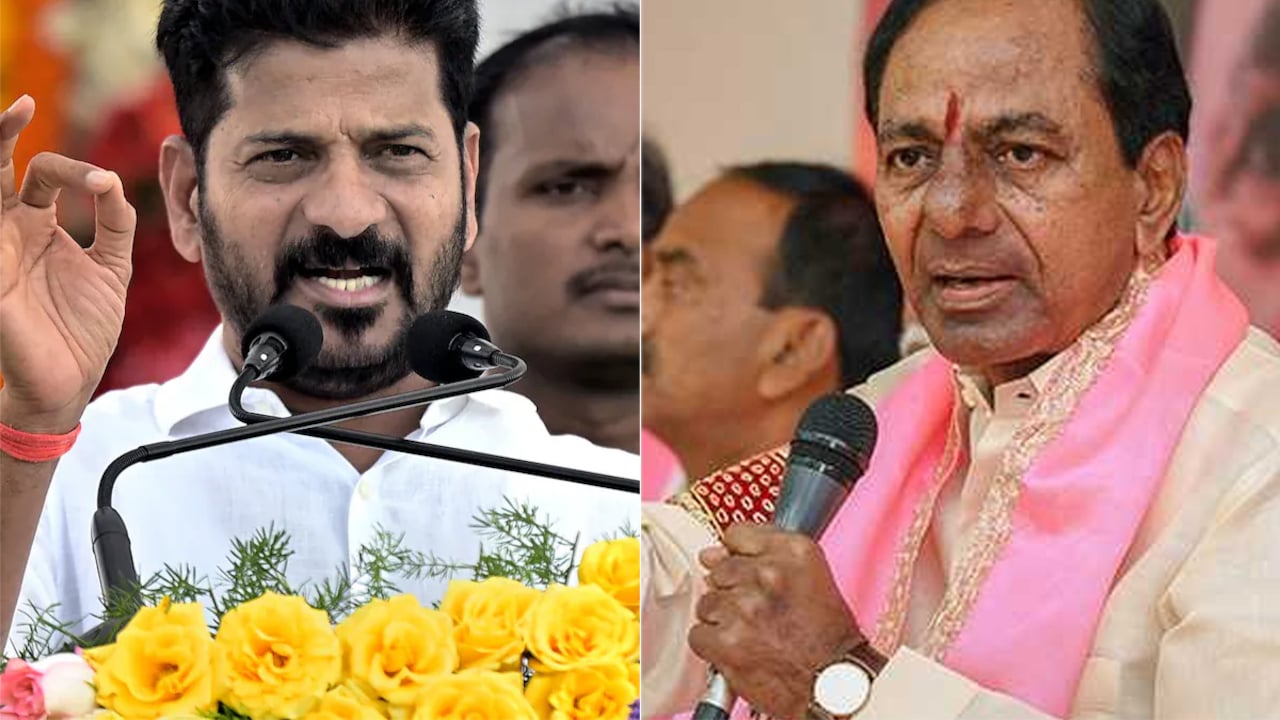
Telangana CM Orders Probe Into Farmhouse Allegedly Linked to Ex-CM KCR

Telangana Chief Minister Revanth Reddy has ordered an investigation into a farmhouse reportedly linked to former Chief Minister K. Chandrashekar Rao. The probe is part of an ongoing political rivalry between the ruling Congress and the opposition Bharat Rashtra Samithi. BRS hit back swiftly, with party floor leader T. Harish Rao alleging that the Reddy family collectively owns around 308 acres of land. The counter-allegation appears aimed at deflecting scrutiny and questioning the Congress leadership's own land holdings. The exchange marks a fresh escalation in political tensions between the two parties in the state.

0
IndiaTimes of India ·

Taylor Swift and Travis Kelce's Ohio mansion fence plans rejected twice by local board

Pop star Taylor Swift and NFL player Travis Kelce are facing a planning dispute over their $5.35 million Ohio property. The couple has sought permission to install fencing around their 21,000-square-foot Lake Erie mansion in Bratenahl village. Their proposals have been denied on two separate occasions by the local village board. Neighboring residents have raised objections over potential loss of lake views, open vistas, and declining property values. The couple is still awaiting approval for the proposed privacy enhancements.

0
IndiaTimes of India ·

GPS collars and camera traps reveal surprising lion-hyena rivalry dynamics

New research has upended the conventional understanding of how lions and hyenas interact in the wild. Using GPS collars and direct field observations, scientists tracked the movement patterns of both carnivores. The study found that while hyenas typically retreat when lions are near, male lions often actively approach and follow hyenas. This points to an asymmetric relationship between the two competing predators. Researchers believe these behavioral patterns may explain how the two species are able to coexist and share the same habitat.

0
ProgrammingHacker News ·

Google Engineers Develop First Fully Vectorized Quicksort Algorithm

Google researchers have announced the development of the first vectorized implementation of the Quicksort algorithm, published via the Google Open Source Blog in June 2022. The new approach leverages vector processing to improve sorting performance across hardware platforms. The implementation is designed to be performance-portable, meaning it can run efficiently on a variety of processor architectures. This advancement aims to make one of computing's most widely used sorting algorithms significantly faster in practice.

0
IndiaNDTV ·

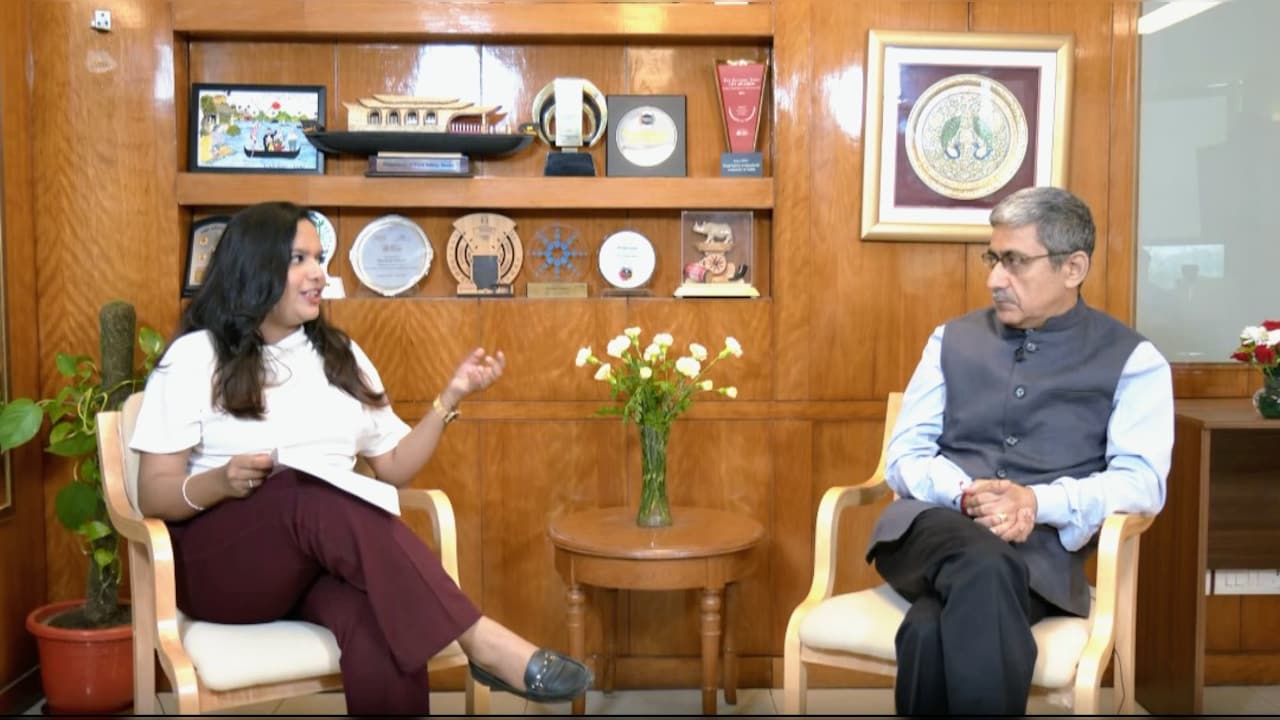
FSSAI Chief Addresses Concerns Over Fake Paneer Sales in India

FSSAI chief Punhani spoke exclusively to NDTV about concerns surrounding the sale of adulterated paneer across India. He clarified that a large number of food inspections result in compliance, with violations representing only a fraction of cases. Punhani noted that media coverage tends to amplify instances of non-compliance, creating a perception that violations are widespread. He emphasized that not every vendor or producer is engaging in malpractice, but reported violations naturally attract public attention.

← NewerPage 1301 of 5605Older →