0
ProgrammingHacker News ·
On Binary Translation and Its Consequences
Article URL: https://chipsandcheese.com/p/on-binary-translation-and-its-consequences Comments URL: https://news.ycombinator.com/item?id=49651107 Points: 15 # Comments: 2
Article URL: https://chipsandcheese.com/p/on-binary-translation-and-its-consequences Comments URL: https://news.ycombinator.com/item?id=49651107 Points: 15 # Comments: 2
A developer has published a tutorial on DEV Community explaining how to use the Windows Data Protection API (DPAPI) to encrypt and securely store data in C++ applications. The guide targets developers interested in cryptography or integrating native Windows security mechanisms into their projects. To illustrate the concept, the author built a C++ console application that accepts a user-provided message, encrypts it, saves it to a binary file, and then decrypts it back. The full source code is available as an open-source project on GitHub under the repository win-crypt-vault. The guide is presented in both English and Turkish, broadening its accessibility across developer communities.
A developer frustrated with all-or-nothing pricing tiers built InBrief, a status page tool that charges separately for each feature rather than bundling them into fixed plans. The base public status page costs $1 per month, with add-ons such as incident management, monitoring, and subscriber alerts each priced between $1 and $3. Two optional bundles — Start at $10 and Pro at $20 — are available for users who prefer simplicity, and both are cheaper than buying their components individually. A free plan and an interactive plan builder let prospective users see their exact cost before signing up. The tool is aimed at small teams and solo founders who need reliable incident communication without paying for enterprise features they will never use.

A Russian strike on a shopping centre in Pavlohrad, a city in central Ukraine, killed five people and wounded 67 others. Ukrainian authorities reported the attack, which targeted the city centre. Local media noted this was the third Russian strike on a shopping mall within just a few days. The repeated targeting of civilian commercial spaces has drawn attention amid the ongoing conflict.

Manually copying login keychain files between Macs no longer works on machines equipped with a Secure Enclave running macOS Tahoe. The change affects a long-standing method IT administrators and users relied on to transfer credentials when setting up a new Mac. The Secure Enclave's hardware-bound encryption is believed to be the reason the copied keychain files cannot be read on a different device. The issue was documented in a blog post published on September 8, 2026. Users and admins affected by this change will need to find alternative credential migration methods compatible with the new security architecture.
Venture capital firm Collaborative Fund has purchased an ownership stake in Major League Soccer club D.C. United, along with a share in its stadium. The deal was led by firm founder Craig Shapiro, who framed the investment as a strategic opportunity for the fund's portfolio startups. Shapiro envisions the sports asset as a platform to showcase and promote the companies Collaborative Fund backs. The move follows a broader trend of venture capital firms, pioneered by Thrive Capital, expanding into professional sports ownership.
A developer enrolled in a DevOps mentorship program in early July went over a month without publishing progress, spending the time reading documentation and studying architecture diagrams rather than writing code. The breakthrough came when she stopped trying to master Docker theory first and instead built a minimal hands-on project called 'boxeur' — an Alpine-based image running a looping Bash script. Through practical errors, such as misconfigured log output and using the wrong package manager on Alpine, she gradually internalized core Docker concepts including images, containers, and stdout conventions. Her mentor had repeatedly urged her to escape 'tutorial hell', the trap of passive video-watching that feels productive but does not build real understanding. The experience reinforced that debugging real errors in a live environment is what converts theoretical knowledge into practical skill.

Developer Samuel Adekunle published a guide on September 10 explaining how to automate Flutter app releases using Shorebird and GitHub Actions. The approach allows developers to push updates directly to users without going through the App Store review process. Shorebird is a code-push solution for Flutter that enables over-the-air updates to live applications. By integrating it with GitHub Actions, teams can set up continuous delivery pipelines that streamline the release workflow. The tutorial is aimed at Flutter and mobile developers looking to reduce release friction and deployment time.

Mobile developers often face delays of days or weeks waiting for App Store and Play Store reviews before updates reach users. A technical guide published on DEV Community outlines how to use Shorebird, a code-push tool, combined with GitHub Actions to automate Flutter app releases and patches. The setup involves creating a Shorebird API key, storing it as a GitHub repository secret, and configuring CI workflows using three official Shorebird GitHub Actions for installation, releases, and patches. Separate workflow configurations are required for Android and iOS, each needing signing credentials stored securely as GitHub Secrets. Once configured, the pipeline allows developers to push updates to users within minutes, bypassing traditional app store review cycles for eligible changes.

A developer building an NBA playoff-odds simulator discovered that the NBA's play-in tournament structure makes its probability markets behave differently from those in other major sports. Unlike baseball or hockey, NBA teams finishing 7th through 10th in each conference enter a play-in round, and only two of those four teams advance to the playoffs. Prediction market Kalshi explicitly separates play-in qualification from playoff qualification, meaning the two outcomes can almost act as opposites for certain teams. To model this accurately, the simulator runs full season schedules, seeds conferences, plays out the three play-in games, and then simulates the complete playoff bracket. Key refinements — including sport-specific scoring exponents, per-season team rating variation, and accounting for two unscheduled NBA Cup games — significantly improved the model's accuracy against market prices.
A developer building Monte Carlo playoff simulators for the NHL identified four key rules that distinguish hockey from other sports: a three-outcome points system, a conference wild-card qualification structure, overtime strength dampening, and a new 84-game regular season starting in 2026-27 under the 2025 CBA. Running 20,000 simulated seasons in early September 2026, the model projected notable differences from prediction market prices, with Boston appearing 27 percentage points undervalued and San Jose 25 points overvalued compared to Kalshi contracts. However, the developer cautions that September model outputs carry limited weight because the simulator relies solely on prior-season performance regressed toward the mean. It has no knowledge of off-season trades, signings, injuries, coaching changes, or goaltending updates that prediction markets have already priced in. The article serves as both a technical breakdown of NHL-specific simulation challenges and a candid warning about the limits of early-season probabilistic models.
A software developer built a football prediction model using the Dixon-Coles statistical method, applying it to eight leagues that rarely receive modelling attention, including MLS, Liga MX, and Colombia's Primera A. The model generates 1X2, Over/Under 2.5, Both Teams To Score, and correct-score probabilities from a single consistent framework. Dixon-Coles improves on basic Poisson models by correcting for the real-world tendency of matches to end 0-0 or 1-1 more frequently than independent probability predicts, using an extra parameter called rho. The developer fitted league-specific parameters using three seasons of historical match data sourced from ESPN's public scoreboard API, with results weighted by recency to reduce the influence of older fixtures. Key practical findings included that rho and home advantage vary meaningfully by league, and that querying the API by date range rather than single day avoids false data gaps for lower-activity leagues.
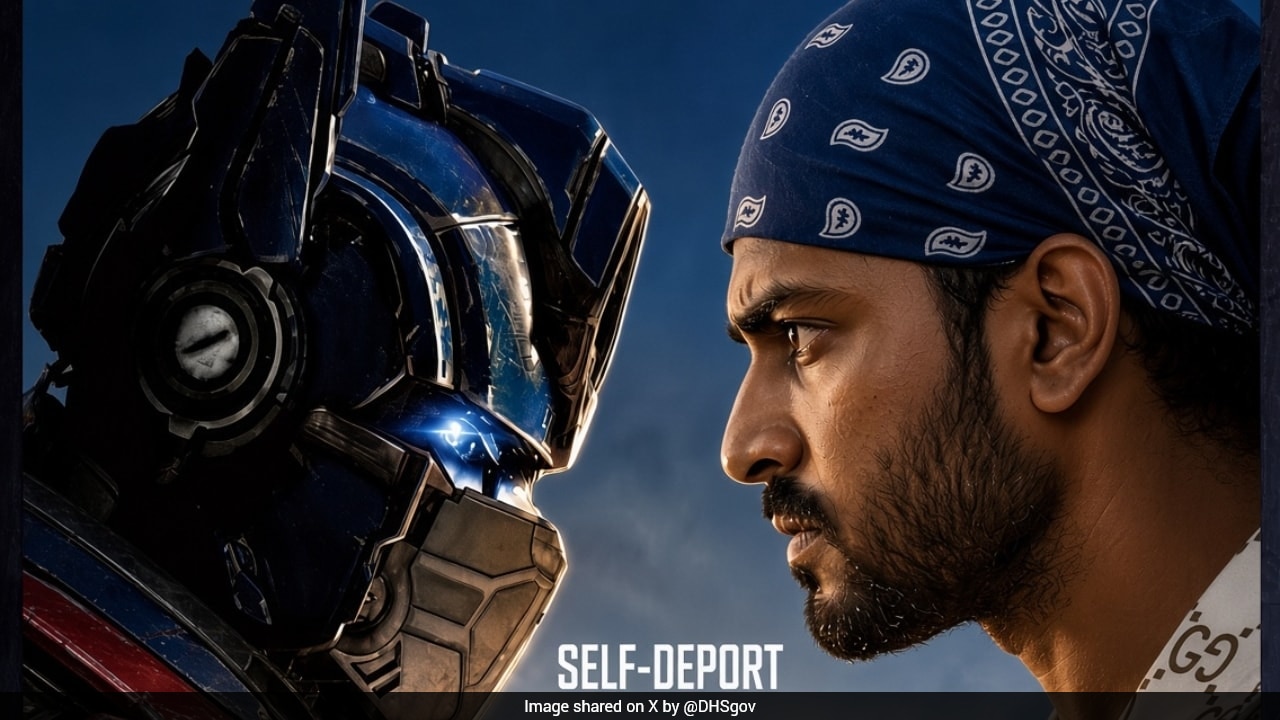
The United States government has removed a controversial advertisement that featured a character called 'Mr Singh', which was widely condemned as racist. The ad, which promoted self-deportation, drew sharp criticism from Indian-American and Sikh advocacy groups who called it deeply offensive. Democratic leaders, including California Governor Gavin Newsom, also voiced strong opposition to the advertisement. The backlash prompted authorities to pull the ad following mounting public pressure from multiple communities and political figures.
A developer ran an experiment to assess how difficult it would be for an outsider to recover secrets from a hardened application build, using a frontier large language model as the investigator. The app's configuration values are XOR-encoded, with working keys derived at runtime from a 32-byte master key that ships inside the binary but is never stored as a readable string. The developer acknowledged upfront that this constitutes obfuscation, not cryptographic protection, since the binary contains all material needed for decoding. Key hardening measures included removing readable strings and decorrelating encoded values to prevent clustering by shared prefixes. The experiment focused not just on whether the LLM could recover secrets, but on how to critically evaluate its findings and gauge confidence in a failed recovery attempt.

A software developer reduced a Python Flask microservice's Docker image size from 442 MB to 56.6 MB — an 87% reduction — by systematically redesigning its Dockerfile. The key changes included switching from the full python:3.12 base image to the leaner python:3.12-slim variant, removing unnecessary packages like curl, git, and vim that have no place in a production container. Additional improvements involved consolidating RUN instructions to avoid redundant image layers, reordering COPY commands to preserve Docker's layer caching, and adding a .dockerignore file to exclude test files and local environments. The hardened image also runs under a non-root system user instead of root, and replaces Flask's built-in development server with the production-grade Gunicorn WSGI server. The author notes that Debian slim was chosen over Alpine Linux due to better compatibility with Python packages that rely on C extensions.
A boy developed a rare skin condition known as 'toasted skin syndrome' after using a laptop on a daily basis. The condition, medically termed erythema ab igne, is caused by prolonged exposure to moderate heat from the device's underside. While laptops typically do not reach temperatures high enough to cause burns, sustained low-level heat can still damage skin over time. The case highlights an underappreciated health risk associated with everyday laptop use, particularly when the device is placed directly on the body.